Hozugawa half-day white water rafting review
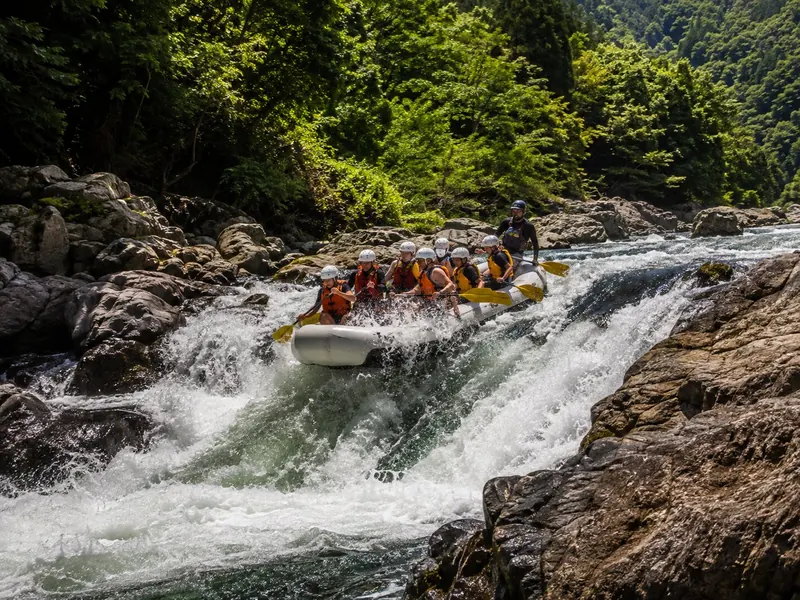
Read this first: this is not the Hozugawa Kudari. It is a raft down the same gorge, and the two get booked interchangeably by people who wanted the other one. The traditional ride is a wooden boat, a bench seat and a commentary; this is a paddle, a helmet and cold water in your lap. Both are good. They are not substitutes. If you came for the scenery and the boatmen, go to the train, boat and onsen day instead.
What the track record actually tells you
This trip has more history behind it than the other five products on this river combined, and it stands highest among the ones with real volume. People who book rafting know exactly what they are buying, get exactly that, and say so. The alignment between expectation and delivery is the whole reason it sits where it does.
No customer quotes here. I could not verify individual review text for this activity, so I will stick to what the volume means.
How it differs from the traditional ride
Same river, different relationship with it. The kudari is a flat-bottomed wooden boat steered by three to five boatmen with oars and bamboo poles, about 100 minutes, 16 km, Kameoka down to Arashiyama, with rock formations and river history narrated as you go. The rafting trip is active: you paddle, you get properly wet, and the rapids are the point rather than the interval between the pools. It departs from Kameoka rather than central Kyoto, so you need to be out there before it starts.
What works
- The most-booked product on the river by a wide margin
- The cheapest way onto the Hozu
- Half a day, so the rest of your Kyoto plan survives
- You will actually get wet, which is the stated point
- Free cancellation up to 24 hours before departure
Worth knowing
- This is not the traditional boat ride and does not replace it
- Departs Kameoka, not Kyoto — you arrange your own transfer
- Wet clothing for the rest of the day unless you pack a change
- No commentary on the tow paths, the rock formations or the history
- Not the trip for anyone who wanted to sit still and look at a gorge
Who should book it
People who want the water rather than the view of it. People travelling in summer, when being soaked is a feature. People who have already done the kudari and want the gorge from a different angle. If you are torn, the honest split is this: the wooden boat is a hundred minutes of history and green water, the raft is a hundred minutes of getting hit by it. What to bring for either is in what to wear on the river.
Check the season before you fix a date. The gorge is at its best from mid-November to early December, but that is also when the water is cold — see best time to visit.
The traditional boat instead
If it turns out the wooden boat is what you were after, these three are the packages that include it.
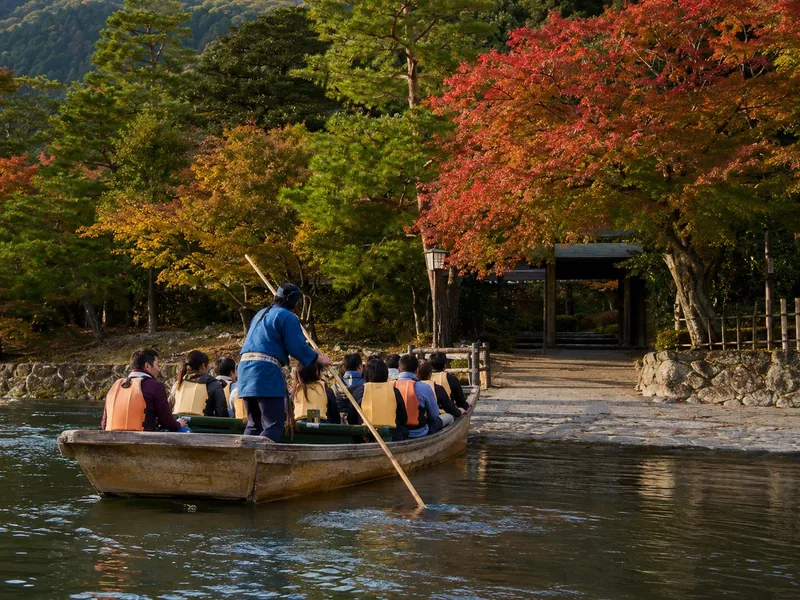 Top pickBoat ticket included
Kyoto: Arashiyama Day Tour with Train, Boat & Onsen
Check availability & price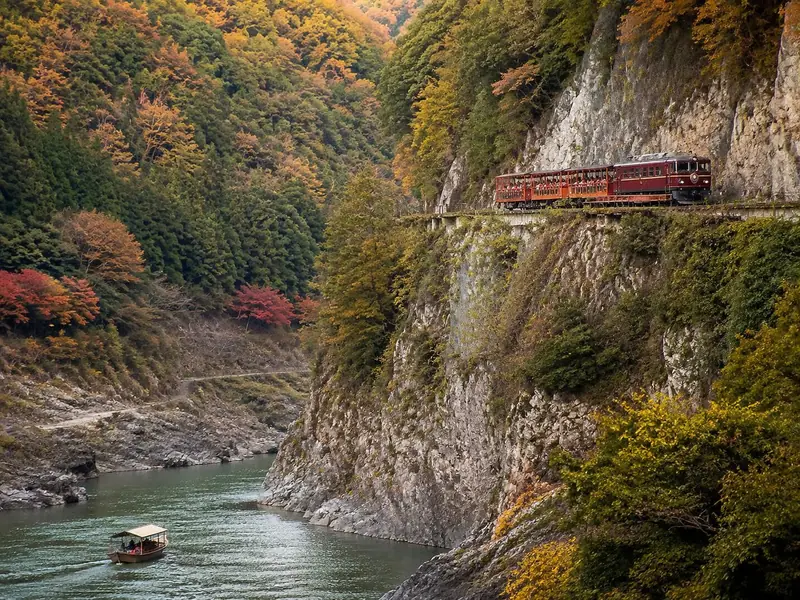 Boat + trainBoat ticket included
Kyoto: Hozugawa River Boat & Sagano Romantic Train Tour
Check availability & price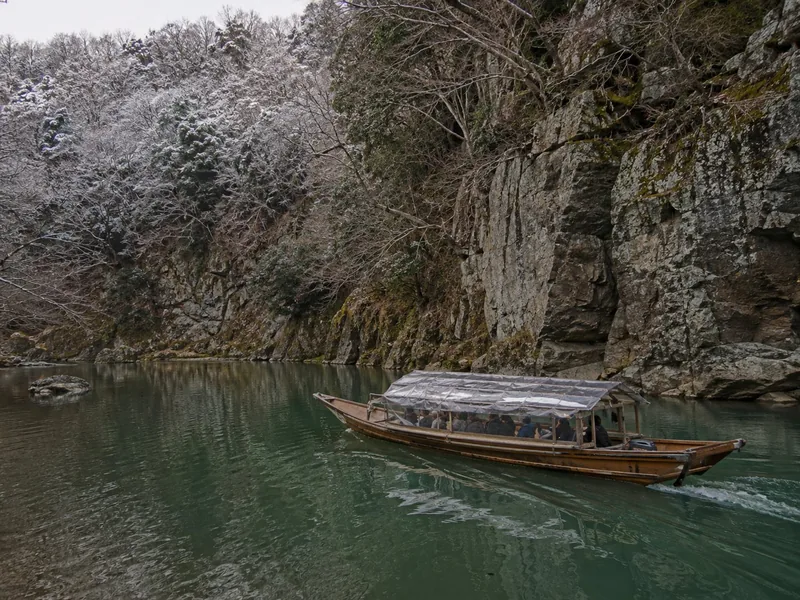 From OsakaBoat ticket included
Osaka/Kyoto: Day Tour to Hozugawa River Boat & Arashiyama
Check availability & priceFrequently asked questions
Is Hozugawa rafting the same as the Hozugawa river boat ride?
No. The boat ride is a 100-minute trip in a flat-bottomed wooden boat poled and rowed by three to five boatmen from Kameoka to Arashiyama. Rafting is an active whitewater run on the same water. Start at the complete guide if you are not sure which one you want.
How wet do you get rafting the Hozu?
Soaked, and that is the design. The traditional boat only splashes you, mostly in the front seats and when the water is high — the comparison is in do you get wet on the boat.
Why is the rafting trip booked so much more often?
It is cheaper, it runs as a half day, and it has been selling longer — comfortably more bookings than any traditional boat package. Volume is not the same as suitability, so do not choose on that alone.
Where does the rafting trip start?
Kameoka, not central Kyoto, so you need to get yourself out there. JR Kyoto to JR Kameoka is 20 to 30 minutes and ¥410; the walk is about ten minutes. Full directions are in how to get there.