Key takeaways
- The walk-up ticket is ¥6,000 for an adult, ¥4,500 for a child. A tour costs more because it moves you, not because the boat is better — the full cost breakdown.
- The run is 16 km and takes about 100 minutes, nearer 60 when the water is high and up to about 110 when it is low — why the clock moves.
- JR Kyoto to JR Kameoka is ¥410 and about 20–30 minutes, then roughly a 10-minute walk to the pier — getting there, and back from the landing.
- Winter has four fixed departures: 10:00, 11:30, 13:00 and 14:30. The rest of the year is hourly on weekdays and when-full at weekends — the whole timetable.
- Six tours put you on this river, and one of them is a raft rather than the traditional boat — compare all six.
What it costs to be on this water
What the flagship Arashiyama day covers
The longest-running package that actually contains the boat ride, and what sits inside the price.
What you do
- The 16 km boat run from Kameoka down to Arashiyama
- The Sagano Romantic Train through the same gorge, in the opposite direction
- Rapids, deep green pools and the old tow paths along the bank
- An onsen stop to finish, which is the part people write home about
What’s in the price
- The boat ticket, so there is nothing to buy at the pier
- The Sagano Romantic Train leg
- An English-speaking guide travelling with the group
- Free cancellation up to 24 hours before, on most tours
Where the boat goes
The 16 km downstream, in the order you meet it.
The boat leaves from Kameoka, works down through the gorge past the old tow paths and the rapids, and ties up at the Arashiyama landing. You go one way only. There is no return leg on the water, which is the single thing most people fail to plan for — see getting there and back.
- Kameoka pier and ticket hall — Where the boats load, roughly a 10-minute walk from JR Kameoka Station. The toilets here are the only ones you will see until Arashiyama.
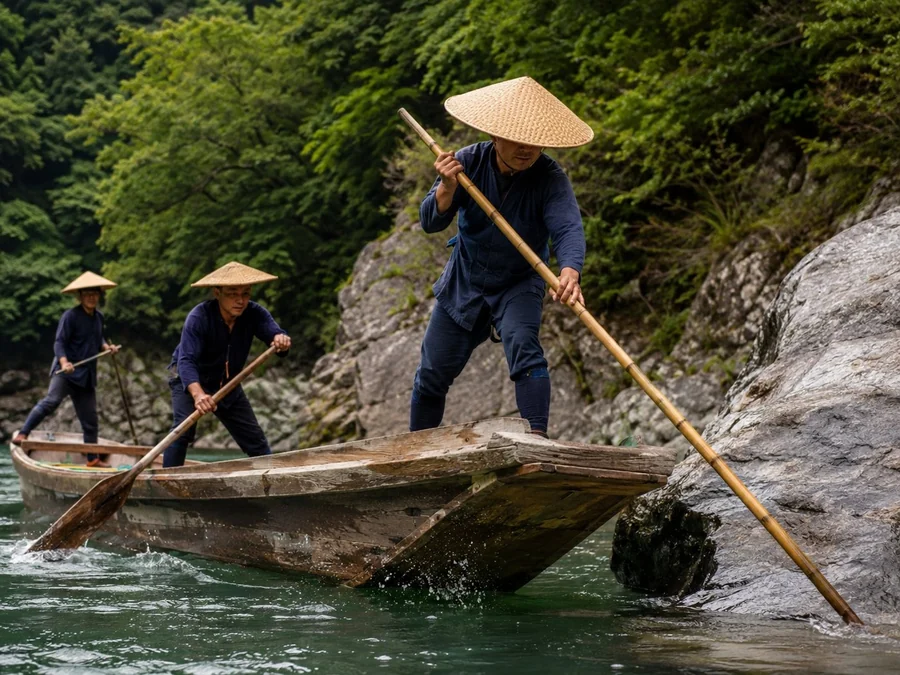
- Casting off, the first flat water — Three to five boatmen work each boat with oars and bamboo poles, swapping roles as the river changes.
- The tow paths on the bank — Cut into the rock, and still visible. Boatmen used to haul the empty boats back upstream from them by rope.
- The rapids section — Short, quick and shallow rather than whitewater. Front seats catch the spray, and more of it when the water is high.
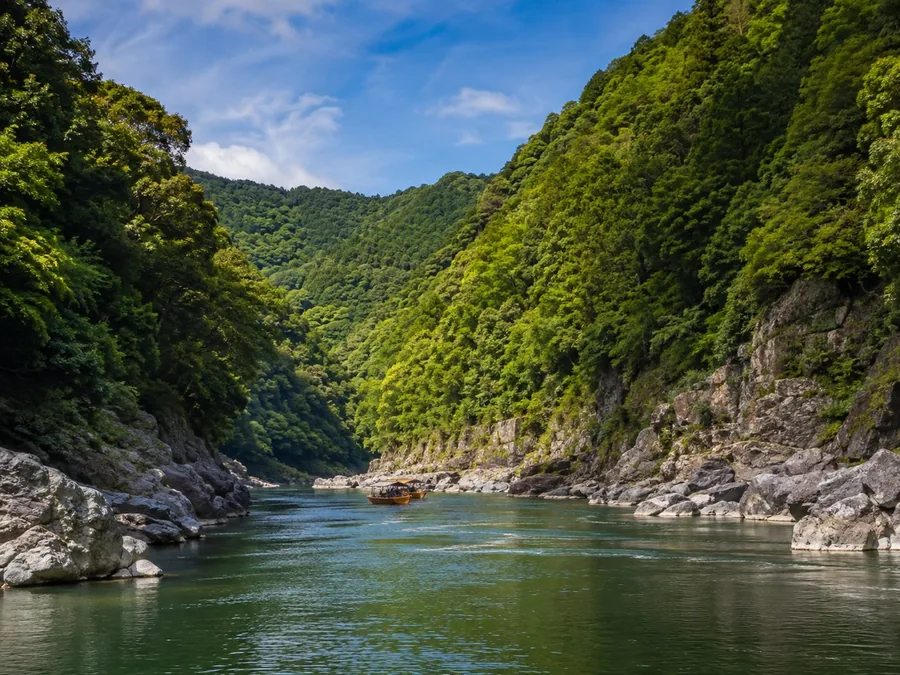
- The deep green pools and rock formations — The slow part, where the commentary happens — rock names, wildlife, river history. Assume Japanese unless a guide is travelling with you.
- The Arashiyama landing — The boat ties up 16 km downstream. From there it is a 15–20 minute walk to JR Saga-Arashiyama Station.
About 300,000 people ride this every year, and the boats run from 10 March to 13 December plus a winter season under a clear canopy. What that means for your date is on the timetable page; what the 100 minutes actually feels like is on what to expect.
How booking works
Decide how much of the day you can give it
Half a day on a raft, most of a day on the flagship, or a full day door-to-door from Osaka.
Check the date, not just the tour
The river closes 29 December to 4 January, and a handful of days in February and September for safety inspections.
Book online
Most of the tours here carry free cancellation up to 24 hours before departure, so an early booking costs you nothing if the plan changes.
Turn up with a raincoat
The tour handles the Kameoka transfer. You handle the splash — see what to wear.
The flagship Arashiyama day, with live dates
Train, boat and onsen in one booking, 4.5–5 hours, departing Kyoto, with the boat ticket already paid for.
Shortest day, fullest day, or no transfer to solve?
Three tours for three different problems. All three include the boat ticket, so you are really buying logistics.
| Kyoto: Arashiyama, Sagano Railway & Hozugawa River Cruise Day | Top pickKyoto: Arashiyama Day Tour with Train, Boat & Onsen | Osaka/Kyoto: Day Tour to Hozugawa River Boat & Arashiyama | |
|---|---|---|---|
| Duration | 7.5–10 hours | 4.5–5 hours | 10 hours |
| Departs from | Kyoto | Kyoto | Osaka |
| Boat ticket | Included | Included | Included |
| Best for | Boat, train and Arashiyama in one booking | Most people: the train, the boat and an onsen in one booking | Not having to work out a single train from Osaka |
| View → | Book this → | View → |
Photo Gallery
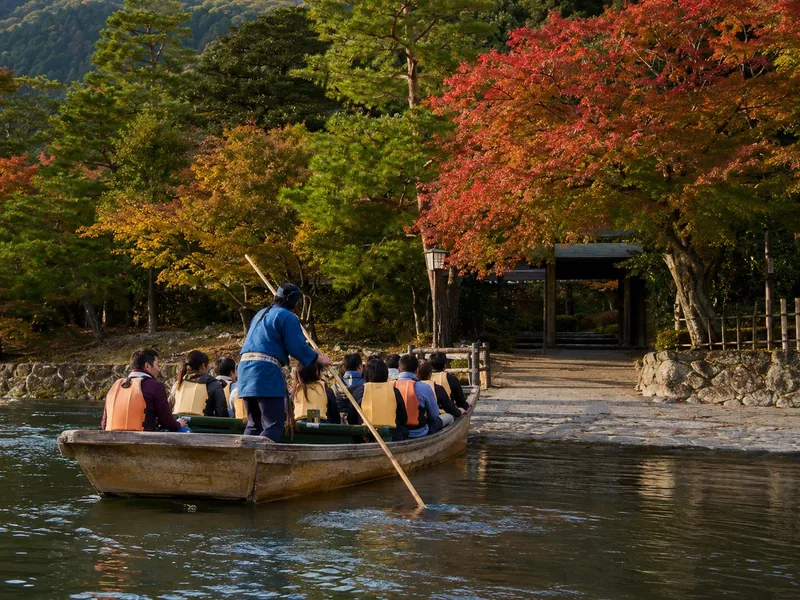
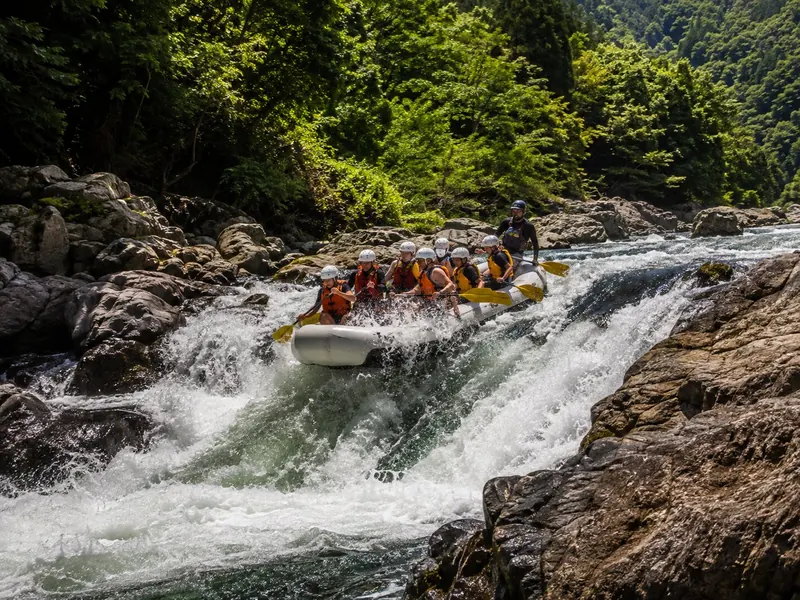
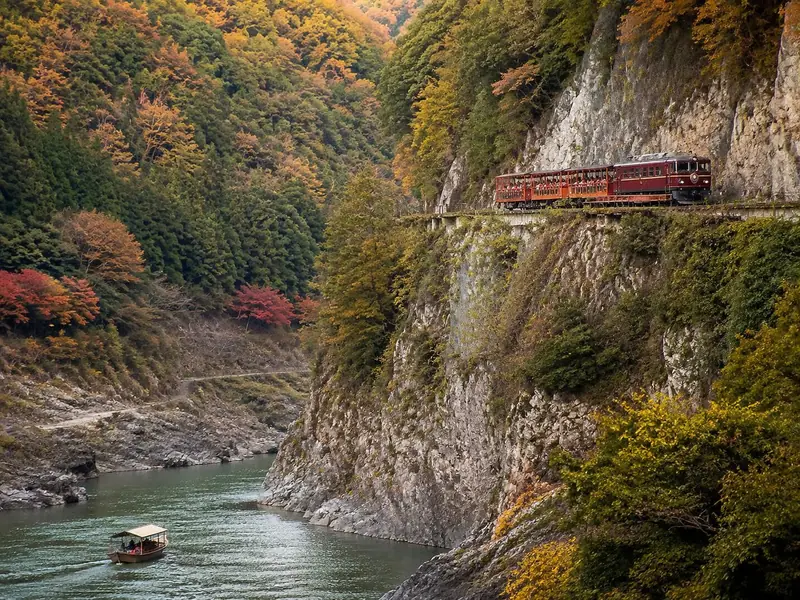
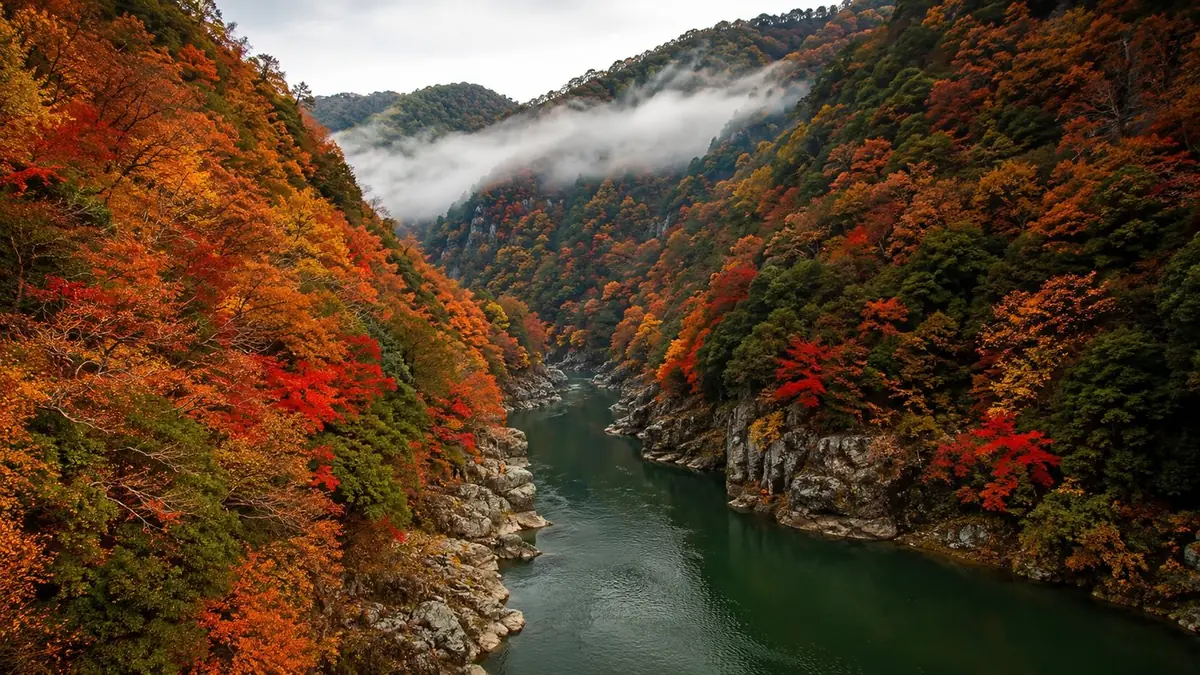
The Hozugawa, from the pier to the landing
The gorge, the boats and the raft that runs the same water.
Every tour that puts you on this river
Six products, one river. Five of them include the traditional boat ticket; the last one is a raft.
Top
pickBoat ticket includedKyoto: Arashiyama Day Tour with Train, Boat & Onsen
Check availability & price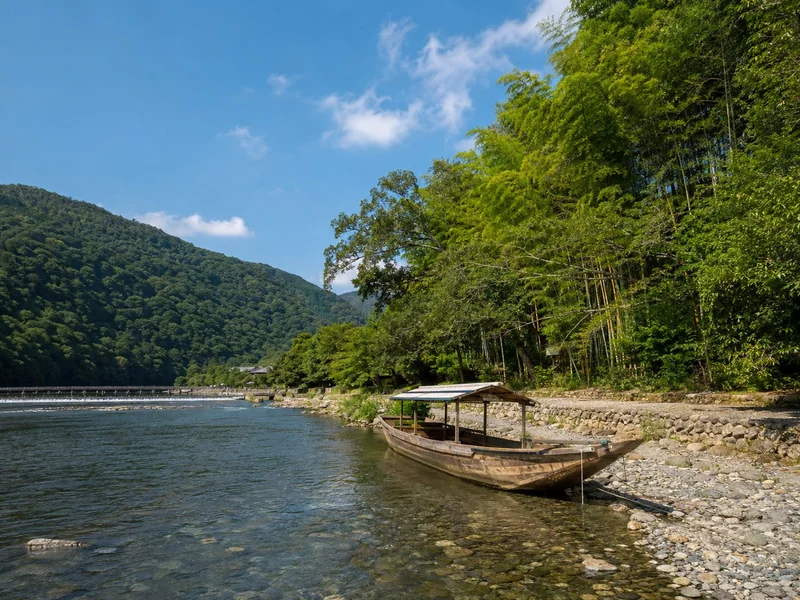 Best valueBoat ticket included
Kyoto: Arashiyama, Sagano Railway & Hozugawa River Cruise Day
Check availability & priceBoat
+ trainBoat ticket includedKyoto: Hozugawa River Boat & Sagano Romantic Train Tour
Check availability & price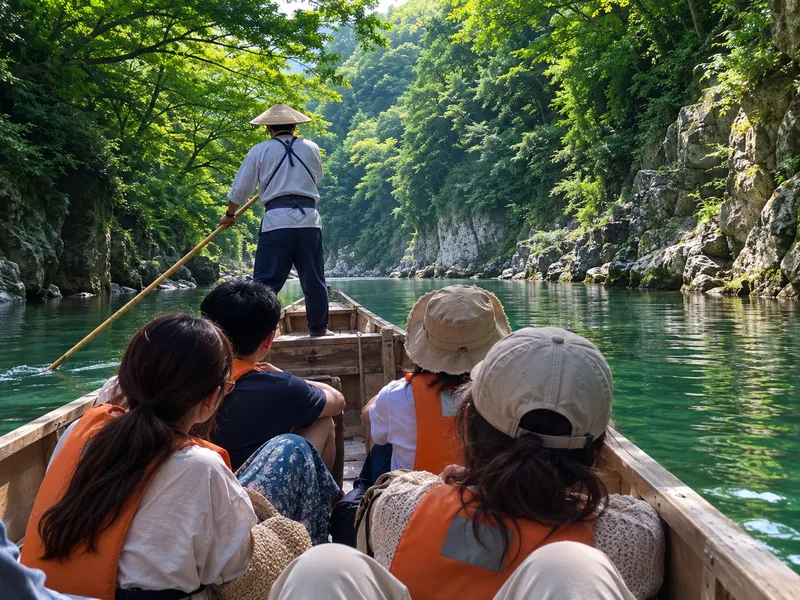 Small
groupBoat ticket included
Small
groupBoat ticket includedKyoto: Hozugawa River Cruise & Sagano Train Experience
Check availability & price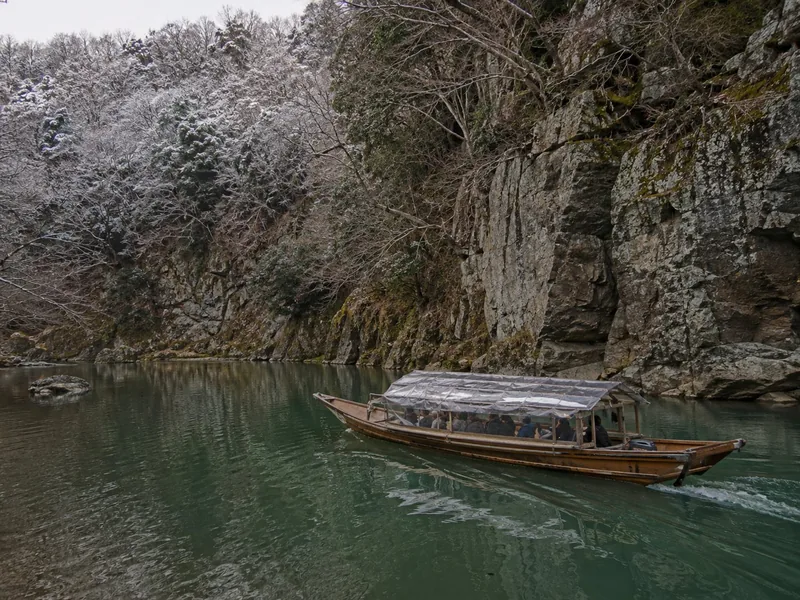 From OsakaBoat ticket included
Osaka/Kyoto: Day Tour to Hozugawa River Boat & Arashiyama
Check availability & priceMost
reviewedKyoto: Hozugawa River Half-Day White Water Rafting
Check availability & priceWhat people said afterwards
Travellers who booked the tours listed above.
The onsen stop at the end turned out to be the best part of the day. The boat itself was calmer than I had braced for.
Train first, then the boat, which was the right way round. Fair warning that a lot of the day is spent sitting on a coach.
Small group, so we could hear. The boatmen showed us the tow paths on the bank where the empty boats were hauled back up by rope.
Soaked by the second set of rapids. That was the point of booking it.
Expensive, and I knew that going in. We did not have to work out one train from Osaka, which is what I was paying for.
A long day. It is also the cheapest way I found to get the train, the boat and Arashiyama into one booking.
Live availability and current prices come straight from GetYourGuide. Read our full tour reviews ›
Things people ask me on the riverbank
The questions that come up before anyone asks about the price.
Is there a toilet on board?
No. The toilets are in the waiting area at the pier, and the ride is about 100 minutes with no stops. Go before you board. More in what to expect on the boat.
Can I bring a bento?
Yes. Food and drink are fine on board as long as you are not disturbing the people beside you. Sun umbrellas are not permitted. The rest of the on-board rules are in what to expect.
Can we bring a toddler?
Not if they are under 80 cm. Life jackets do not fit below that, so they cannot board even carried. Wheelchair users can board with a companion, and the folded chair is stowed — it may get wet. See how the boats are seated.
What happens if the river is too high?
Service is suspended in severe weather or when the water is too high or too low. Online bookings are refunded in full automatically and you are notified by email that day or the day before — cancellations and refunds.
Can’t make these dates?
Browse more available hozugawa river boat ride and find one that fits your schedule — all with instant confirmation and free cancellation.
The Hozugawa River boat ride, explained
I grew up ten minutes from the boarding pier in Kameoka and spent four seasons working on that bank. In all that time almost nobody asked me about the river. They asked how much of their day it was going to cost them, and whether that was a fair trade. This is my answer to both, with the parts nobody puts on a poster.
What the boat is, and who is steering it
A Hozugawa boat is a flat-bottomed wooden hull with bench seating and no engine. Three to five boatmen work each one, some on bamboo poles at the bow, one on the stern oar, swapping roles as the water changes under them. That crew is the whole safety system and the whole entertainment. They talk the entire way down — the named rocks, the birds, what the river did in a bad year — and unless a guide is travelling with your group, they are talking in Japanese. Around 300,000 people ride it a year, so the boats load briskly and the seating is shared.
The practical shape of it, which matters more than most people expect: there is no toilet on board, only in the waiting area at the pier, and you are committed for roughly an hour and a half once you push off. Food and drink are allowed, so a bento is fine as long as you are not crowding the person beside you. Sun umbrellas are not permitted. Anyone under 80 cm tall cannot board at all, even carried, because the life jackets do not fit them. A wheelchair user can board with a companion; the folded chair is stowed and may get wet. I go through the rest of it on what to expect on the boat and how the boats are seated.
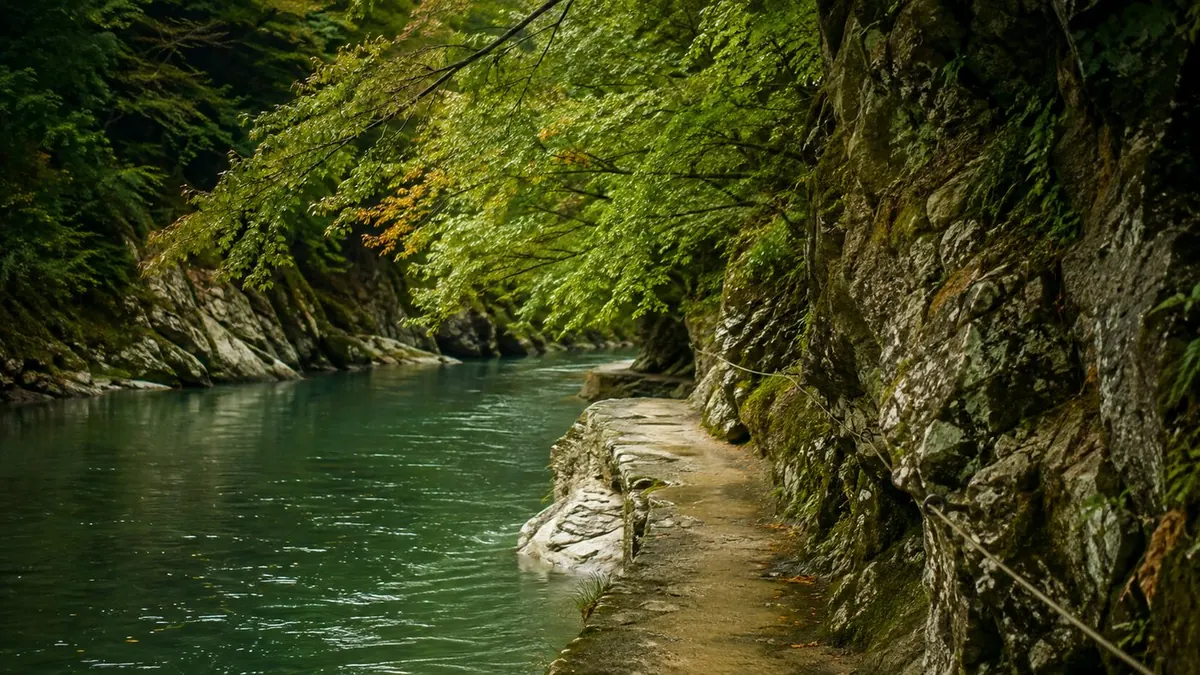
The channel you are floating down was cut on purpose
People treat this stretch as scenery. It is closer to infrastructure. Timber was floated down the Hozu towards the capital from about the 8th century, and in the early 1600s the merchant Suminokura Ryōi widened and cleared the channel so rice and cargo boats could get through to Osaka. The run you are paying for is a working freight route that stopped being needed.
Look at the bank rather than the water and you will see the tow paths, cut into the rock at roughly waist height above the river. Crews walked those with ropes over their shoulders, hauling the empty boats back upstream against the current, over and over. It is the single most interesting thing on the trip and hardly anyone photographs it.
How the 100 minutes actually feels
About 100 minutes is the honest average. When the water is high and fast the same 16 km can go by in roughly 60 minutes, and the boat feels like a different product. When the water is low it stretches to about 110 minutes, with far more poling and a lot more work for the crew. You cannot pick which one you get. It depends on the week’s rain.
It is also not 100 minutes of rapids. Most of the run is deep, green, slow water where nothing happens except the commentary and the gorge walls going past. Then a rapid arrives, the boat drops and skews, someone in the front two rows takes a faceful of the Hozu, and thirty seconds later it is quiet again. That rhythm is either the charm or the disappointment, depending on what you came expecting. If you want the water rather than the view, the raft down the same gorge is a completely different day out. A light raincoat covers the splash on the traditional boat; see do you get wet and what to wear. Winter boats run under a clear canopy, which keeps the wind off and not much else, so dress for the temperature.
Why the Sagano train is always sold with it
The Sagano Romantic Train runs the same gorge in the opposite direction, Saga up to Kameoka. That is the whole reason the two are bundled. The train carries you to the top of the valley, the boat brings you back down it, and you see one landscape from two angles without solving a transfer in between. Sold separately they are two logistics problems. Sold together they are an itinerary. Which packages pair them, and how they differ, is on boat and train tours.
The objection: it eats your day
It does. I am not going to argue with that. Count it honestly: JR Kyoto to JR Kameoka is ¥410 and about 20 to 30 minutes, then roughly a 10-minute walk to the pier. The ticket at the counter is ¥6,000 for an adult. The ride is about 100 minutes and lands you 16 km downstream, from where it is a 15 to 20 minute walk to JR Saga-Arashiyama Station. Half a day is gone before you have eaten anything, and that is on a day with no queue and no weather.
So here is my verdict. If Arashiyama was already on your list, the boat is the best possible way to arrive there, and a package like the flagship day removes the two transfers that make it painful. If you have two days in Kyoto and a long list, skip it — you will spend the afternoon feeling behind. And if you are based in Osaka, do not try to improvise this with timetables. Take a door-to-door day and pay for the logistics. I have laid the whole argument out on is it worth it, the sums on the cost page, and every package that includes the ride on all tours.
Frequently asked questions
Is the Hozugawa river boat ride worth it?
Yes, with one condition: you have to be willing to give it the day around it. The ride itself is about 100 minutes of gorge, rapids and boatmen working with poles, and it lands you 16 km from where you started. If your Kyoto trip is three days long and packed, it will cost you more than it gives. I make the full case, including who should skip it, on is it worth it.
How much is a Hozugawa river boat ride?
At the pier it is ¥6,000 for an adult and ¥4,500 for a child from infant to elementary school. A guided tour that includes the ticket, the Kameoka transfer and usually the Sagano Romantic Train costs more, because it moves you. Live prices sit on the booking panel, and they change, so I do not print them here. How long you are out you are out. The yen table and the do-it-yourself sums are on the cost page.
Do you need to book the Hozugawa boat in advance?
Not always. Same-day tickets are sold at the pier counter, first come first served, and groups of nine or fewer can book online. Golden Week and the November foliage season do sell out, and groups of ten or more should phone ahead. What a tour booking covers that a bare ticket does not is on tickets and booking.
Do you get wet on the Hozugawa river boat ride?
Usually a little, sometimes properly. The front seats catch the most, and so does everyone when the water is high. A light raincoat or poncho fixes it. If you actively want to be soaked, book the raft instead — see do you get wet and what to wear.
How long is the Hozugawa river boat ride?
About 100 minutes on a normal day. High, fast water can cut it to roughly 60 minutes; low water stretches it to about 110. Add the transfer at both ends and the whole thing is a half day at minimum — the arithmetic is on how long the ride takes.
Where does the Hozugawa river boat ride run from and to?
From the pier at Kameoka, about a 10-minute walk from JR Kameoka Station, down 16 km of the Hozu River to the landing at Arashiyama in Kyoto. From the landing it is a 15–20 minute walk to JR Saga-Arashiyama Station for the train back. Both ends are mapped on how to get there.
What time does the Hozugawa boat run?
From 10 March to 13 December, weekdays have hourly departures between 09:00 and 15:00; at weekends and on holidays boats leave when they are full, so there is no clock to work to. The winter season runs four fixed departures at 10:00, 11:30, 13:00 and 14:30. Full timetable and the closed dates are on best time to visit.
Still have questions? Email us [email protected]